
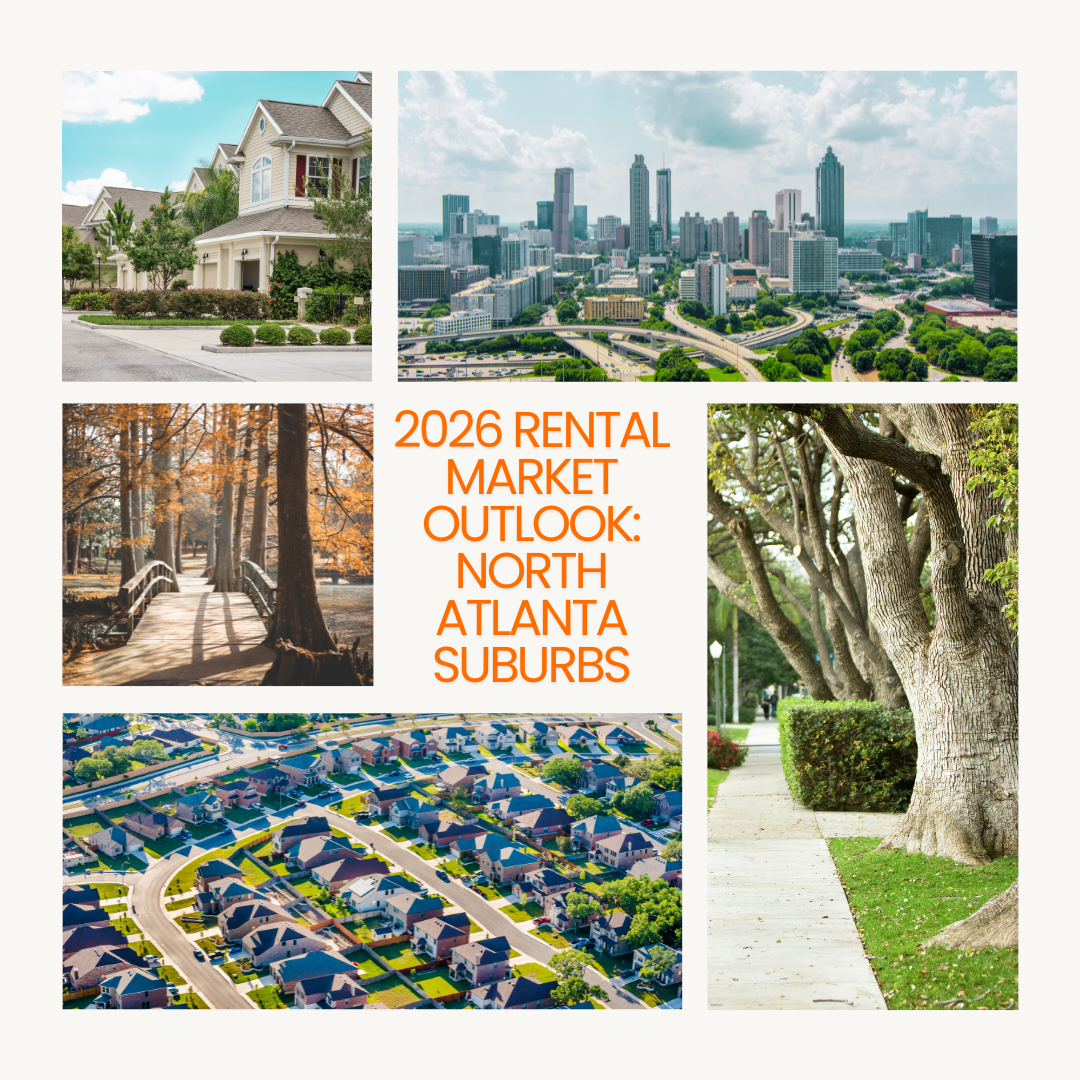
2026 Rental Market Outlook: North Atlanta Suburbs
Introduction
As 2026 approaches, the rental markets in the northern Atlanta suburbs continue to offer dynamic opportunities for investors, landlords, and property managers. Each suburb has unique demographic, housing, and demand drivers, but common themes include limited supply of quality rental homes, evolving tenant expectations, and the importance of location, property condition, and management.
Below is a breakdown of the key trends and drivers in Johns Creek, Alpharetta, Duluth, Decatur, and Cumming, Georgia.
1. Johns Creek, GA
Johns Creek remains a highly sought-after suburb due to its strong school system, safe neighborhoods, and relatively high household incomes. The limited rental stock, especially quality townhomes and single-family homes, gives landlords an advantage. Statewide rental market data shows rising rents and high demand in core regions, which benefits suburban markets like Johns Creek.
Looking ahead to 2026, landlords with properties in top neighborhoods should anticipate moderate rent growth, particularly for well-finished units attractive to professionals and families. Single-family rentals and premium townhomes are likely to perform best. Turnover costs and tenant experience will be increasingly important, making well-managed properties stand out. Agents and investors should monitor upcoming developments or zoning changes that could increase rental supply and competition.
Key Resource: Johns Creek Planning & Zoning Division of Community Development
The Johns Creek Planning and Zoning website can help investors:
- Identify highest and best use before buying, confirm if the intended use (e.g., multifamily, commercial, mixed-use) is allowed.
- Determine what can or cannot be built without rezoning.
- Determine risk analysis: Some zones have tight restrictions that limit redevelopment—or require rezoning or conditional use permits.
2. Alpharetta, GA
Alpharetta’s reputation for tech jobs and growth attracts renters seeking good schools and convenient access to Atlanta. This appeals to young professionals and families, supporting demand for larger rentals. The broader Atlanta rental market shows signs of stabilizing, with declining supply and expected rent growth.
In 2026, Alpharetta rental rates are expected to remain stable or grow modestly, especially for newer or renovated units in desirable communities. Older or less-updated properties may face challenges. Landlords should consider upgrades or professional management to remain competitive. Highlighting property features such as school districts, community amenities, and a walkable lifestyle will be important.
Key Resource: Understand the industries that drive Alpharetta.
- ACCIONA, a global leader in sustainable infrastructure and renewable energy, recently opened an office in Alpharetta, Georgia.
- 5Q, a leading IT and cybersecurity firm serving the Commercial Real Estate industry, has relocated its headquarters in Alpharetta, Georgia
3. Duluth, GA
In 2026, Duluth’s rental market is expected to remain stable with modest upward pressure, rather than experiencing the rapid rent growth seen earlier in the decade. Rents are already in the low-to-mid $2,000s depending on property type, reflecting Duluth’s appeal as a well-located, family-friendly Atlanta suburb. As affordability challenges continue to delay homeownership for many households, demand for single-family rentals and larger townhomes is likely to stay resilient, supporting consistent occupancy and gradual rent increases rather than sharp spikes.
Atlanta-area trends will shape Duluth’s outlook. Fewer new apartments should help balance supply, while Gwinnett County’s population and job growth support rental demand. In 2026, owners and investors should focus on disciplined pricing, tenant retention, and operational efficiency, especially for well-maintained properties in top school districts and established neighborhoods.
4. Decatur, GA
Decatur offers a more urban environment than some outer suburbs, featuring vibrant local amenities, walkability, and an eclectic community. This attracts young professionals, commuter-friendly renters, and those valuing lifestyle. The suburban rental shift in metro Atlanta means more renters are choosing suburbs or near-suburbs over city-center locations.
In 2026, rental properties in Decatur that emphasize convenience, amenities, and walkable lifestyles may command premium rates and lower vacancy. However, property condition is critical; older properties may require more maintenance and could experience higher turnover unless well-managed. Investors should consider the differences between traditional single-family homes and multifamily rentals to meet tenant demand.
Key Resources: Understand developments that can influence the value of your investment property
Say Hello to Halo! Halo is a 370 unit apartment building that features retail and plaza space, partnering with The Decatur Artist Alliance to host Artist in Residence
- Galore Market to be Halo’s first retail tenant
5. Cumming, GA
Cumming, including the Lake Lanier area, attracts renters seeking a suburban or rural lifestyle, larger homes, and access to outdoor amenities. While some markets face supply pressure, demand for rentals in lifestyle-oriented suburbs remains strong due to affordability and desirable living conditions. Statewide data shows an average rent of about $1,835- $2,500.
In 2026, single-family rentals and larger townhomes in Cumming are expected to perform well if marketed to families and professionals desiring space and quality. Investors should assess turnaround time, maintenance costs—especially for properties near lakes or nature—and implement strong tenant screening. Amenities such as garages, yards, community features, and management responsiveness will boost retention and returns.
Key Resources: Understand developments that can influence the value of your investment property
Overall Summary & Actionable Tips
- Rental demand in metro Atlanta remains resilient, with supply constraints in many suburbs supporting steady occupancy and moderate rent growth.
- Condition and management are increasingly important, as tenants expect higher quality, amenities, and responsive service.
- Tenant profiles and rental home types vary by suburb; families and professionals dominate in many areas, so property offerings should align with their expectations regarding schools, commutes, and lifestyle.
- Investors and landlords should be selective, focusing on well-positioned properties in high-purchase price areas, conducting thorough due diligence, and budgeting properly.
- Building partnerships with agents, brokers, and property management firms, such as PMI Centennial, is advantageous for accessing quality listings, tenant pipelines, and operational support.
Action Steps for Landlords and Investors
- Audit your property’s condition and tenant experience to determine if upgrades or professional management could enhance returns.
- Benchmark rents by suburb and property type to understand market comparables and set realistic expectations.
- Budget for maintenance, vacancies, and turnover costs, as suburban single-family homes often incur higher operating costs than apartments.
- Build relationships with local agents and management firms to secure referrals, quality tenants, and smooth property management.
- Monitor supply signals; new builds or large rental developments in a suburb may affect vacancy rates and rent growth.
Why This Matters for PMI Centennial
As a property management firm serving the Atlanta metro area and its suburbs, PMI Centennial is well-positioned to guide landlords through market nuances. Our services encompass realistic rent setting, tenant screening, maintenance and repairs, and tenant retention. We translate broad market trends into actionable outcomes tailored to each property.
Conclusion
In 2026, the rental markets in Johns Creek, Alpharetta, Duluth, Decatur, and Cumming present nuanced opportunities. Upside potential exists, particularly for well-located, well-maintained homes, but success requires proactive management, operational efficiency, and alignment with tenant expectations. Landlords and investors who view management as a strategic asset will be best positioned for strong returns.
